The shift towards chiplets and multi-die assemblies is driving significant changes in the global supply chain, including the need for closer collaboration between businesses and governments to ensure the authenticity and quality of semiconductor components.
For some time, the chip industry has viewed digital certificates as the best way to reduce counterfeit products and ensure consistent quality. The problem is that this requires the joint participation of governments, manufacturers, and assembly houses, and not all stakeholders are willing to invest the necessary infrastructure and technology to share digital certificates. However, this situation has changed, partly due to the exponential growth of multi-chip products for high-performance computing (HPC) that drive artificial intelligence applications. Equally important, government demand for certified non-HPC equipment used in critical infrastructure and defense applications has also driven this transformation.
Over the past five years, industry alliances and several countries have established forums to discuss technology investment and economic incentives, and some countries have passed legislation to regulate and invest in the semiconductor industry. But successfully closing supply chain loopholes requires filling existing gaps, eliminating conflicts between standards and regulations, breaking down barriers between suppliers and customers, and establishing a recognized business and technical framework.
This is not a new concept. The software industry has been creating and using digital certificates for years. In contrast, the chip industry's attempts have been far less successful. Several alliances have identified pathways to implementation, including leveraging tamper-proof physical identifiers, third-party certificate authorities, and integration with factory data automation systems, but so far, implementation has been inconsistent.
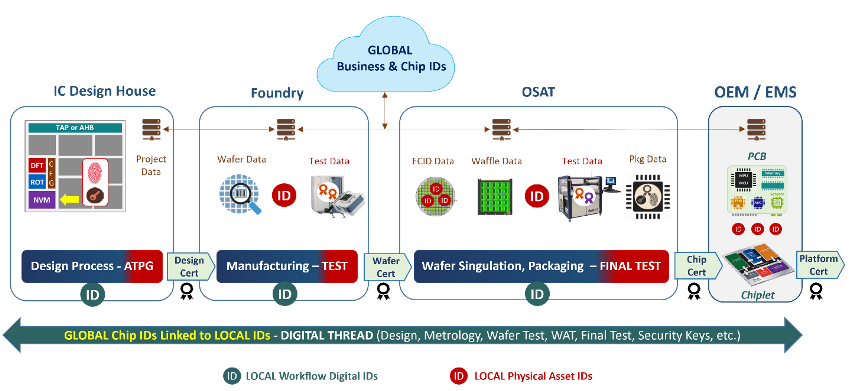
Figure 1: Trusted supply chains establish connections through electronic manufacturing processes using device identifiers linked to asset certificates. Source: Archon Design Systems
What's clearly missing is a strong economic incentive for design firms and factories to invest in the underlying technologies, and a consensus on an open ecosystem. Concerns about counterfeit products have certainly provided a clear impetus and have long increased industry attention; the availability of manufacturing data traceable to specific semiconductor components has also brought additional economic incentives. Ultimately, what disrupts the balance is new government policies and regulations - regulations that require suppliers to have the necessary infrastructure to do business with government-related entities.
"Counterfeit microelectronic components are a structural problem stemming from supply chain fragmentation and opacity," said Daniel Dimas, founder and CEO of Aerocyonics. "Overproduction and substandard testing of products may originate from legitimate manufacturing processes but re-enter the market without verification of their source (i.e., gray market equipment). The lack of standardized chip-level identification allows these components to be masqueraded as genuine, jeopardizing safety-critical systems and damaging intellectual property and manufacturing investments. Industry sources say the global economic impact far exceeds the estimated $7 billion to $10 billion in counterfeit losses annually. If the costs of recertification, project delays, and security risks are factored in, the actual losses will be an order of magnitude higher."
This cost affects both chip sellers and buyers. "My previous company received a Returned Product (RMA) for a certain device, which turned out to have originated from the gray market," said Niza Bassoko, manager of Teradyne's mobile business unit. "They were deemed defective somewhere in the supply chain, but somehow ended up in the hands of customers after being acquired and resold by others. We had to investigate thoroughly to find the root cause."
Nevertheless, adding extra layers of technology and business processes incurs costs and raises the question: are customers truly willing to pay higher prices for reliable devices?
"Several industries are ready to pay for trusted supply chain equipment," said Lee Harrison, Director of Tessent IC Solutions at Siemens EDA. "Clearly, the defense sector sees it as extremely valuable, and the automotive industry is also paying close attention. Furthermore, all hyperscale data center operators (such as Meta and AWS) are willing to pay for it due to the issue of silent data corruption (SDC). Right or wrong, they see it as providing a degree of traceability to address discovered silent data corruption failures."
Others agree that the high-performance computing sector and government entities using it for defense and critical infrastructure will be key drivers of technology adoption.
"The U.S. government clearly wants the capability for a trusted end-to-end supply chain," said John Carulli, Director of Emerging Technology Ecosystem Development at Advantest America. "This is a driving factor. Over the years, leading fabless and fabless companies have implemented customized traceability infrastructure solutions at different levels to improve yield, reliability, quality, performance matching, and supply chain management/resilience. But ultimately, it may be the overall economic factors that drive this - Perhaps advanced packaging driven by high-performance computing applications will make this capability the mainstream standard."
Align with supporting technologies, standards and regulations
Overlapping standards, a lack of strong economic incentives, and inconsistent regulations across countries all contribute to complicating the realization of this vision. This requires collaborative efforts from the chip industry and participating governments to support the development of relevant technologies and commercial infrastructure.
"Achieving a verifiable, interoperable semiconductor traceability framework requires collaboration across technology, organization, and policy," said Tom Kaziuras, CEO of Archon Design Systems. "While technologies and standards already exist, adoption depends on consistent incentives, coordinated policies, and interoperable data frameworks that connect the value chain. Barriers such as proprietary data silos, high integration costs, and inconsistent regulatory frameworks can be mitigated through shared governance and coordinated policies."
The supporting factors and barriers (see Figures 2 and 3) list the key forces and demonstrate how fragmented supply chains can be virtually reintegrated into a verifiable, federally trusted network.
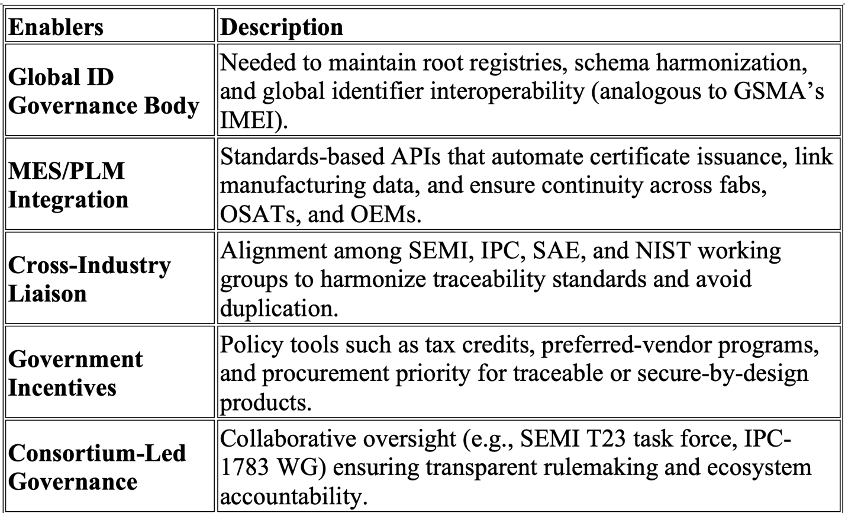
Figure 2: Supporting factors for reintegrating fragmented supply chains through federal trust infrastructure. Source: Archon Design Systems
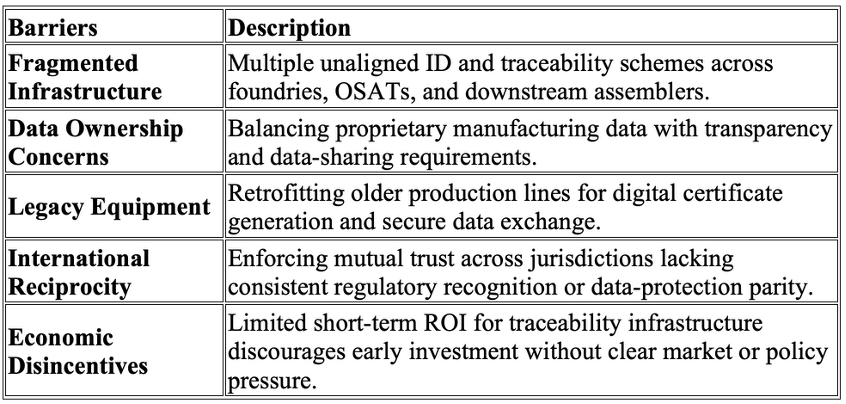
Figure 3: Barriers to reintegrating fragmented supply chains through federal trust infrastructure. Source: Archon Design Systems
Traceability and other relevant standards
To control product yield and quality, both foundries and fabless companies have implemented some form of traceability scheme, covering parts of the supply chain. However, these schemes are mostly customized solutions and typically cannot achieve data sharing across the entire supply chain (i.e., from the foundry to the end application). To address this issue, relevant standards have been introduced. For example, SEMI E142 (Substrate Mapping Specification) stipulates a set of basic requirements for linking manufacturing data with the location of equipment on the substrate. This standard is specifically applied to the packaging and testing of semiconductor devices, but due to low profit margins, OSAT (Outsourced Semiconductor Assembly and Test) plants have been reluctant to implement it.
However, this situation is beginning to change. "To optimize the packaging process, you need to understand which chips are picked up, placed, and integrated into different products," said Dave Huntley, Director of Business Development at PDF Solutions. "This standard has nothing to do with Physically Unclonable Functions (PUFs) – it only concerns the x and y coordinates on the wafer, their position within the package, and recording this information in an E142-compliant data system. Several customers are now required to comply with the E142 standard, and we are providing the relevant data systems. Frankly, it shocks me how long it has taken people to implement the basic requirements of E142. There is now clear data showing they must comply, and those that are not are losing business."
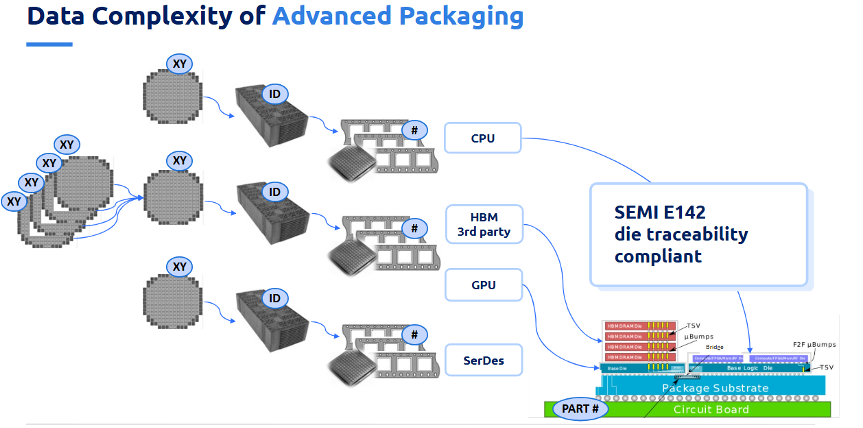
Figure 4: Schematic diagram of a SEMI E142 compatible system. Source: PDF Solutions
At the end of the supply chain are electronic systems that require trusted devices and trusted software, an area where several standards already exist.
"IEEE 802.1AR is a foundational standard," says Mike Bolza, a scientist at Synopsys. "The Trusted Computing Group's (TCG) DICE protocol is used in both commercial and non-commercial applications. [6] The Open Computing Project (OCP) is introducing it into data center computing and it is likely to be adopted in other areas as well. In addition, the National Institute of Standards and Technology (NIST) and the Semiconductor Equipment and Materials International (SEMI) are developing standards and technologies to strengthen semiconductor supply chain security."
Existing and developing standards connect semiconductor devices from the initial design stage through the manufacturing process all the way to the end application.
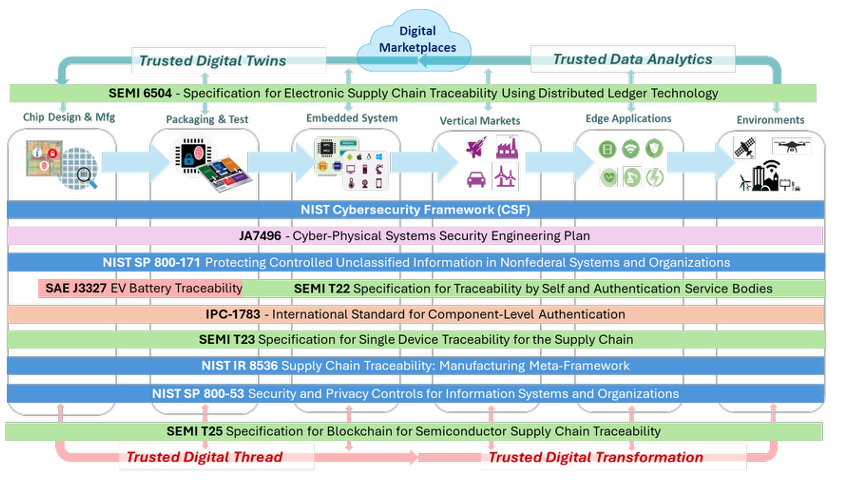
Figure 5: How widespread standards promote the digitalization and economic security of trusted supply chains. Source: Archon Design Systems
The table below lists the standards that form the core of a trusted semiconductor supply chain. These standards collectively build capabilities for connectivity traceability, cyber-physical security, and cross-border regulatory compliance.
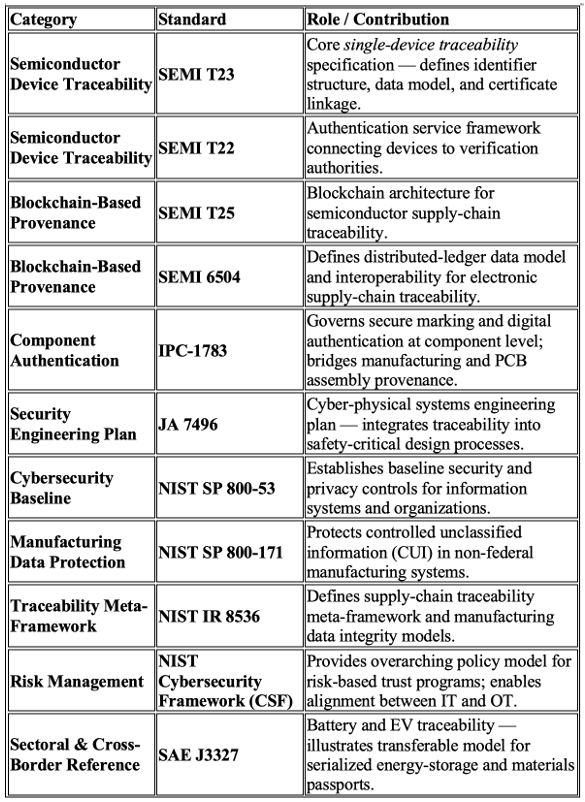
Figure 6: Global standards defining origin, security, and interoperability. Source: Archon Design Systems
The driving force of regulation, policy and alliances
While the aforementioned standards, government regulations, and related policies support the construction of a trusted supply chain, the system remains imperfect. Gaps exist in existing standards and regulations, and conflicts and overlaps exist between them, hindering technology adoption. The responsibility for filling these gaps and resolving conflicts falls on semiconductor industry alliances and government regulatory bodies. Given the global nature of semiconductor manufacturing, these organizations need to work together and communicate effectively.
The limitation of single-chip mask size also adds urgency to the transformation of chip design. "Standardization will be a huge help," says Bolza of Synopsys. "The basic technologies are well-known, but getting numerous suppliers and customers across the supply chain to use these technologies consistently has been a challenge. Organizations like the UCIe Alliance have recognized this and are addressing the issue head-on. The result will be a highly unified identification protocol between chip suppliers and customers using advanced high-density device packaging solutions."
The reality is more complex than it sounds. UCIe guides the design connections between chips in digital circuit products with high-density interconnects. In contrast, mobile phones and public safety radios require radio frequency (RF) devices, digital signal processors (DSPs), and other mixed-signal functions. Hospital medical devices and wearable health devices (such as insulin pumps) incorporate microelectromechanical systems (MEMS), sensors, and mixed-signal devices. These electronic systems also require security, traceability, and regulatory compliance.
Furthermore, integrated circuit design-driven initiatives may not cover the numerous manufacturing processes, data automation, and decentralized data lakes. To achieve further breakthroughs, integrated circuit design standards and safety regulators need to collaborate with other parts of the semiconductor production chain.
SEMI recently launched a "Phase 0" initiative focused on traceability. Its goal is to create a harmonized international governance framework for chip and commercial identification infrastructure by adopting necessary industry standards. With the support of relevant agencies in the United States and Europe, this framework can harmonize cross-border traceability practices and link data through digital certificates, thereby forming a metadata network.
"Our industry follows national and international standards with regulatory implications," explains Melissa Gruben-Shermanki, Chief Technology Officer at SEMI. "We also adhere to quality specifications that define safety and reliability standards. Finally, industry standards underpin processes, products, services, and integrations. Industry standards typically evolve throughout the technology or product development cycle, and traceability standards are no exception. Some traceability standards already exist and are continuously being improved, particularly in areas such as device identification content, device certification structures, and labeling. However, the development of many more standards depends on the global implementation of traceability infrastructure. Therefore, before identifying standard gaps, the primary task of the Phase Zero initiative is to reach a consensus on traceability goals and identify the gaps in the traceability structure itself."
Meanwhile, numerous government laws and regulations are creating an environment where trusted semiconductor devices are no longer an option.
"Regulatory bodies are moving forward in unison," said Dimas of Aerocyonics. "Section 5949 of the National Defense Authorization Act (NDAA), the CHIPS and Science Act, and the EU's Cyber Resilience Act and Digital Product Passport all point to a future where traceability is no longer an option. The opportunity before us is to build a connected system at the technological, regulatory, and economic levels that makes 'trusted supply' measurable and enforceable throughout the semiconductor value chain. When the chip itself can prove its origin, every subsequent system will inherit that trust."
Mandatory trust in devices directly addresses the problem of identifying counterfeit parts, while also creating new revenue opportunities.
"Beyond compliance, traceability establishes a new layer of economic intelligence - certified lifecycle data can be monetized through yield optimization, predictive maintenance, and data-driven services such as Hardware as a Service (HaaS) or digital twin analytics," Dimas said. "Tracing origin is not just an operating cost, but a source of competitive advantage and sustainable value creation within the ecosystem."
Customer demand will drive technology adoption
Alliances and regulators will work together to create an environment requiring large system developers to source products from trusted suppliers with verifiable evidence. This requirement will then propagate upstream to various electronics manufacturers and design companies. The strongest economic driver will come from purchasers of high-performance computing equipment. Furthermore, systems procured by governments for defense and critical infrastructure, such as hydroelectric plants, will eventually require suppliers to provide verifiable, trusted equipment. In short, customer demand will drive this change.
More than a decade ago, original equipment manufacturers (OEMs) began requiring their integrated circuit suppliers to provide readable identifiers and propagated this requirement upstream. Teradyne's Basok recalls her experience at her previous company: "Initially, we didn't offer a solution due to concerns about sharing internal access rights/data. But later it became a customer mandatory requirement," Basok explains. "When we tried to find out who made these requirements, it turned out to be the end-product/system customers. As this requirement spread throughout the supply chain, it meant that if we wanted to sell products, we had to have this capability - it was no longer an option."
Others agree that customer demand will drive investment to build a comprehensive trusted supply chain for chips. "Manufacturers produce products that customers need and are willing to pay for," said Bolza of Synopsys. "There's no doubt that adding the necessary components to support a trusted supply chain for integrated circuits increases costs and complexity, including the complexity of the manufacturing process. These costs need to be passed on to customers. For end-product manufacturers, the incentive is continued access to regulated markets—and in some cases, to avoid liability for selling products deemed unsuitable for their intended use in freer markets. Integrated circuit manufacturers are suppliers to these companies, and like semiconductor manufacturers, they produce products to meet customer needs."
Another driving factor is the potential for new business opportunities arising from connectivity based on trusted device-related data.
"Beyond certification, this connectivity enables the secure storage of manufacturing and testing data within the trusted domain of the wafer fab, and the provision of this data as a service for digital twins, yield optimization, and lifecycle analysis," said Dimas of Aerocyonics. "When this traceability chain extends to packaging and testing facilities, OEMs, and system integration stages, raw test data is transformed into a dynamic network of trust, linking component-level integrity with system-level assurance."
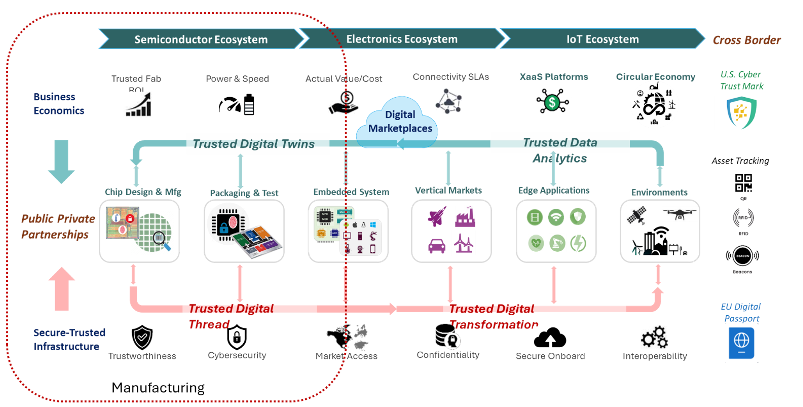
Figure 7: Trusted supply chains enable the digital market for trusted digital twins and data analytics. Source: Archon Design Systems
Building a trustworthy semiconductor supply chain will significantly reduce counterfeit devices and create new business revenue. However, achieving this goal requires consensus within the semiconductor industry on implementation, consistency between existing and upcoming government regulations, and a willingness from all parties to develop necessary shared policies.
Source: Content from semiengineering